
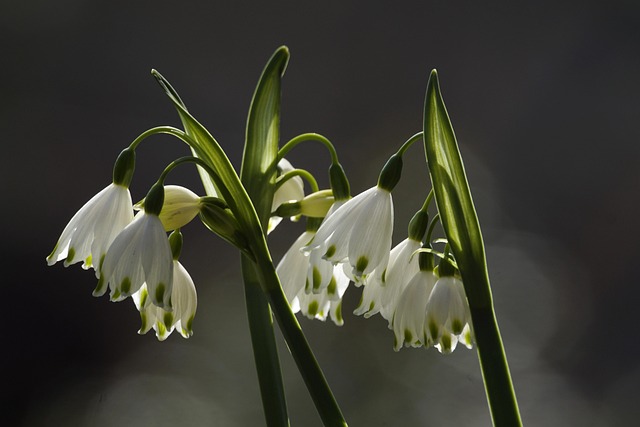
Snowdrops (also called Galanthus) are among the earliest spring bloomers, often pushing through the last patches of snow to signal the end of winter. With their delicate, nodding white flowers and slender green leaves, they create a striking contrast against the still-dormant landscape.
Their ability to bloom in late winter makes them a vital early nectar source for pollinators (and great choice to plant in cool-season veggie gardens to attract pollinators).
Gardeners appreciate snowdrops for their resilience and low-maintenance charm. Once planted, they spread gradually in drifts, rewarding patience with carpets of white over the years.
They prefer well-drained soil and dappled shade, and they can be left undisturbed for decades, multiplying naturally.
Why plant in the fall?
Bulbs need a period of chilling to bloom in the spring. Planting them in the fall gives them enough time to root before the ground freezes. Plant them en masse between September and November.
How to plant
- Amend the soil to ensure good drainage.
- Plant the bulbs 3–4 times as deep as the height of the bulb.
- Water the bulbs well after planting.
- Apply mulch, such as wood chips, several inches deep after planting.
Where to plant
- Snowdrops prefer rich, well-draining soil.
- They grow well in shade or part-shade.
- They can be planted in groundcovers, rock gardens, or raised planters.
When to fertilize
- Fertilize with bulb fertilizer at the first sign of spring shoots or right after blooming.
Snowdrops are deeply rooted in folklore, often associated with purity consolation, renewal, and hope. They are cherished for their beauty and the optimism they bring during the year’s coldest months.