
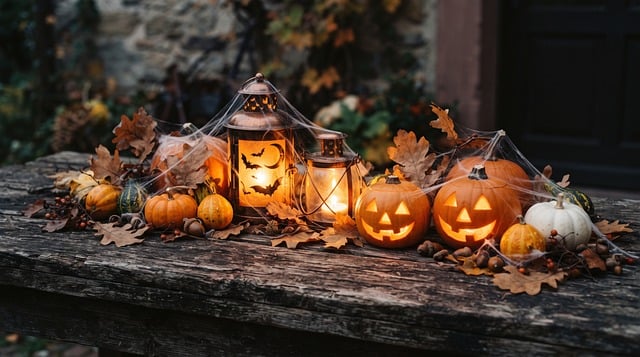
Faux webbing is surprisingly dangerous to wildlife when used outdoors in and around gardens, porches, trees and shrubs.
Why faux webbing is harmful to wildlife
- Birds can become tangled in it. Fine synthetic strands can wrap around wings, legs, feet, and beaks. A bird trying to pull free can make the strands tighten, potentially causing serious injury or preventing it from feeding or flying.
- Bats are particularly vulnerable. Bats may fly through the material while hunting insects and become entangled.
- Small mammals and reptiles can get caught. Squirrels, chipmunks, snakes, lizards, and other animals moving through landscaping can become trapped in loose strands.
- Pollinators can become entangled. Bees, moths, butterflies, and other insects may get caught in the sticky-looking fibers, particularly when the webbing is stretched across flowering plants.
- It doesn’t break down naturally. Most decorative webbing is made from synthetic fibers. Once discarded, residue from it can persist in the environment rather than decomposing like natural materials.
- It can be mistaken for natural nesting material. Birds sometimes collect fibrous material for nests. Synthetic webbing can become incorporated into nests, where it may entangle nestlings or adults.
- Wind makes the problem worse. Webbing can detach from its original location and end up in trees, shrubs, fences, and natural areas where wildlife encounters it.
A better Halloween garden
You don’t have to give up the spooky garden look. Consider using reusable fabric, paper decorations, faux pumpkins, wooden signs, lights, or decorations that don’t have loose strands.
If you love the webbed effect, keep it indoors or tightly contained on a porch where wildlife can’t access it, and remove it immediately after Halloween.
For a wildlife-friendly garden, one of the simplest rules is: if a decoration has fine, stringy material that wildlife could fly, crawl, or walk into, don’t put it outside. This is especially worth considering in a Colorado garden, where yards are an important habitat and wildlife regularly moves through them.
If you do use faux webbing, keep it indoors or tightly contained and remove it promptly after Halloween.
Birds may become trapped while searching for insects, while bats and other nocturnal wildlife can become caught in the webbing at night. The material can snag on vegetation and persist in the environment long after Halloween.