
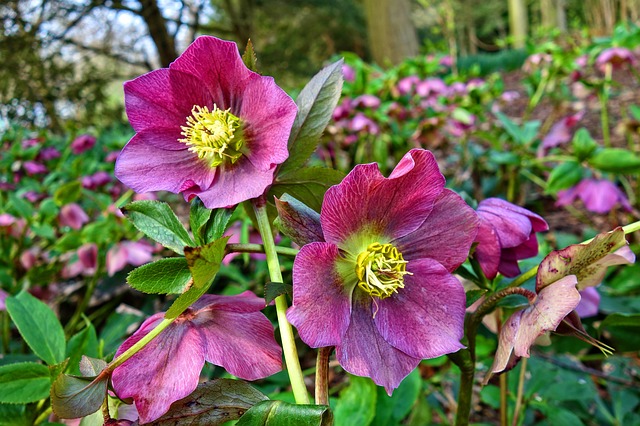
Hellebores are perennials bulbs prized for flowering very early in the Spring, often when the rest of the garden is still dormant.
When to plant. In Colorado, the best time to plant hellebores is September to October). They can be planted in Spring (late March) also, but not as successfully.
Because hellebores thrive in cool soil, avoiding the hot, dry summer months gives them the best chance to establish a strong root system.
Autumn planting is highly effective because the soil is still warm, but the air temperatures are cool. Ensure you plant them at least one month before the ground hardens and freezes (up to late September, early October) so the roots can transition smoothly into winter.
Choose the right location. Hellebores prefer morning sun and afternoon shade. A spot beneath deciduous trees is ideal: they receive sunlight in early spring before the trees leaf out, then shade during summer. This is especially helpful in Colorado’s intense high-elevation sun.
Give them well-drained, organic soil. They don’t like sitting in wet soil, particularly through winter. Work compost into the planting area, but don’t create a heavy, overly rich planting hole that holds water around the roots.
Water consistently while establishing. New plants need regular moisture during their first growing season. Once established, hellebores are relatively drought tolerant in shade, but Colorado’s dry air and winters can still cause stress.
Mulch but don’t bury the crown. A 2-inch layer of compost or shredded leaves helps conserve moisture and moderate soil temperatures. Keep mulch a little away from the crown of the plant.
Watch the Planting Depth: Never bury the crown (where the stems meet the roots) too deeply. The crown should sit at or slightly above the soil level to prevent crown rot.
Amend clay soil: Colorado is notorious for heavy clay soils, but hellebores require excellent drainage. When digging your hole, amend your native soil with roughly 30% compost or organic matter to prevent water from pooling around the roots.
The big Colorado advantage
Many hellebores are remarkably cold hardy, with some varieties rated to Zone 4 or even Zone 3 (be sure to look for that kind when purchasing). They can tolerate cold winters, but late spring freezes can damage emerging flowers. Don’t be alarmed if the foliage looks a little beaten up after winter—the plants often recover beautifully.
When to cut them back
In late winter or very early spring, remove old, damaged foliage before the new flowers and leaves emerge. This exposes the flowers and reduces the chance of old foliage harboring disease.
Recommended varieties for our area
Look for Helleborus×hybridus and other hardy garden selections (see below). Flower colors range from white and cream to pink, burgundy, purple and nearly black, with both single- and double-flowered forms.
- Maestro (Helleborus x ballardiae ‘COSEH890’): Tested in Colorado, this compact plant features deep pink to dusty rose and creamy white flowers on strong stems.
- Merlin (Helleborus x ballardiae ‘COSEH810’): A proven performer from the ‘Gold Collection’ offering low-maintenance pink-to-rose blooms and dark green leaves.
- Sandy Shores: Part of the Honeymoon series, this Zone 4 hardy plant shows off warm apricot blossoms and survives late winter snow.
- Winter Jewels ‘Amber Gem’: A Zone 4 hardy choice that produces striking double golden-yellow flowers brushed with red.
How to use them in a Colorado landscape: plant hellebores beneath deciduous trees or along a shaded woodland edge, combined with spring bulbs, hostas, heucheras and ferns. They provide that wonderful moment of color when you’re desperately ready for Spring but the rest of the garden hasn’t quite awakened yet.
CAUTION: Hellebores are toxic if eaten and can cause skin irritation when handled, so gloves are a good idea when planting or pruning.