
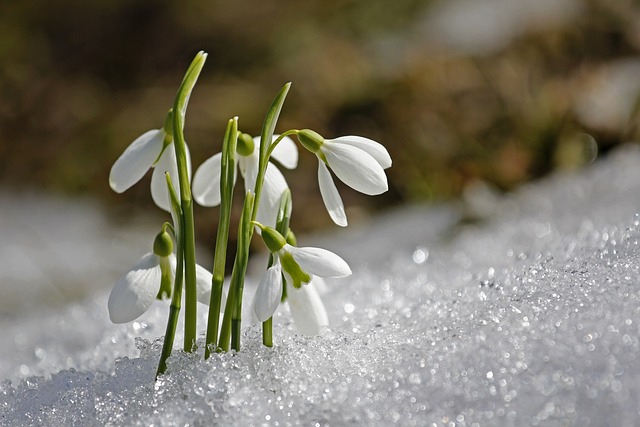
For a Colorado garden, they’re especially appealing because they bloom very early, before most perennials have emerged.
When do snowdrops bloom?Snowdrops generally flower from late winter into very early spring. At higher elevations, blooming can be considerably later than in milder climates.
One of their remarkable characteristics is their ability to flower in cold conditions. A late snowfall usually doesn’t bother them.
The flowers may close during particularly cold weather and reopen when temperatures moderate.
Plant snowdrops in Fall
Snowdrops are normally planted as bulbs in autumn, ideally as soon as the bulbs become available. Fresh, firm bulbs are much more likely to establish than bulbs that have been sitting around and drying out. Snowdrop bulbs don’t store particularly well compared with some other spring bulbs.
Plant them approximately 3-4 inches deep, with the pointed end upward. Space them about 3-4 inches apart if you want them to naturalize into a colony.
Where should you plant them?
Snowdrops naturally lend themselves to woodland-type conditions. Look for:
- Morning sun or filtered light
- Dappled shade beneath deciduous trees
- Well-drained soil
- Soil that doesn’t become bone-dry during spring
- Locations protected from intense afternoon heat
One of the best spots is beneath a deciduous tree. Snowdrops flower before the tree leafs out, giving them plenty of spring sunlight. Later, the developing canopy provides summer shade while the bulbs are dormant.
Don’t let them dry out while growing
Snowdrops appreciate consistent moisture while they’re actively growing and flowering. This is important where we live, where winter and early spring can be surprisingly dry. That doesn’t mean soggy soil but moist and well-drained.
Once the foliage has died back naturally, their water requirements drop substantially.
Let the foliage die naturally
This is one of the most important rules for growing snowdrops. After flowering, the leaves continue photosynthesizing and replenishing the bulb for next year’s flowers. Don’t cut the foliage down while it’s still green. Let it yellow and collapse naturally. Once it’s completely finished, you can tidy the area if desired.
Snowdrops can naturalize – one of their nicest qualities
Given the right conditions, snowdrops can gradually form beautiful colonies. They spread through offsets (“daughter” bulbs) and seeds. You may eventually see little groups of snowdrops rather than individual plants. This is one reason they look so wonderful planted beneath trees or along woodland paths.
Don’t plant them like tulips
Snowdrops are much more charming when planted in groups and drifts rather than in perfectly spaced rows. Try planting:
- 10–20 bulbs in a loose group
- Several groups along a path
- Natural-looking clusters beneath a tree
- Mixed with other early spring bulbs
The goal is to make it look as though they naturally appeared.
Tips for elevations above 6200 feet
A protected location can be beneficial, especially somewhere that isn’t repeatedly subjected to extreme temperature swings. Avoid planting them in a location that becomes a winter ice pocket or stays saturated from snowmelt.
Consider planting them where they receive good early-season sun but some protection from intense summer heat.
They’re wonderful for early pollinators
Snowdrops aren’t just pretty. Their early flowers can provide one of the first available nectar and pollen sources for insects emerging in late winter and early spring. That makes them a lovely addition to a wildlife-friendly garden.
What if snow falls on them?Leave them alone.
Snowdrops are remarkably cold tolerant. Their flowers can emerge through snow, and another snowfall generally isn’t a reason to cover them. That’s part of their magic: while everything else looks dormant, these tiny white flowers are already announcing that spring is coming.
Should you fertilize?
Usually, not much is necessary if your soil is reasonably fertile. If your soil is poor, incorporate compost before planting. Avoid heavy nitrogen applications, which can encourage foliage at the expense of the overall balance of the plant. A light layer of compost around established colonies is generally more useful than aggressive fertilization.